Gas Piston vs Spring System: Which Murphy Bed Lift Mechanism Is Better?
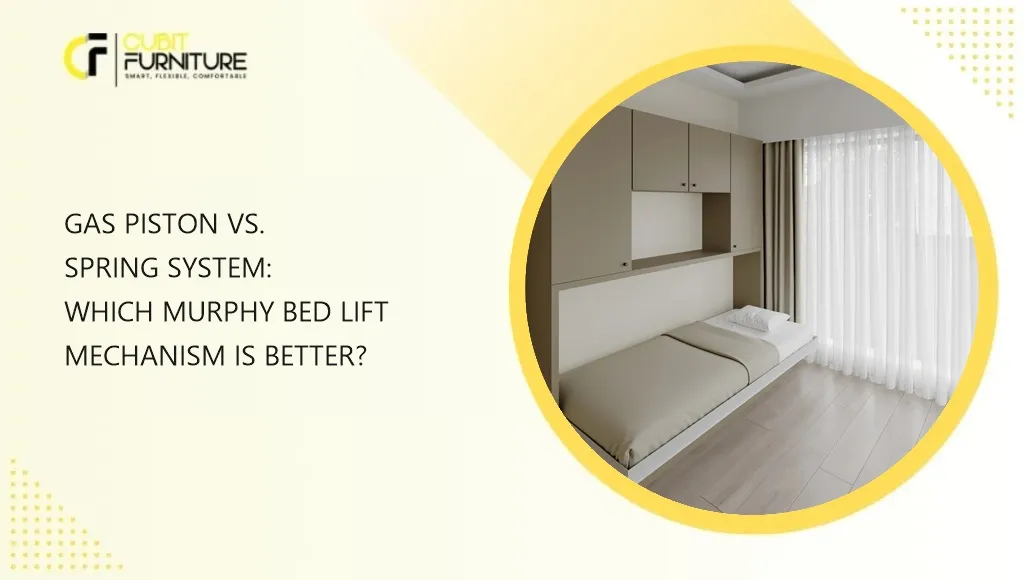
A Murphy bed turns a bedroom into a flexible space, and its specialised lifting hardware makes the daily fold possible. At Cubit Furniture, we see the mechanism as the heart of any space-saving Murphy bed. Gas piston and spring systems both guide a folding bed design into its cabinet, and they differ in operation, upkeep and ease of use. This guide walks through the factors that help you choose with confidence.
Understanding How Murphy Bed Lift Mechanisms Work
A well-chosen lift mechanism makes a wall bed feel light, steady and easy to move. The Murphy bed lift mechanism uses counterbalance hardware to offset the combined weight of the frame and mattress. That balance controls how the bed opens and closes, so each movement feels smooth.
- Working principle: The folding bed mechanism stores and releases force to assist movement.
- Counterbalancing: Balanced force keeps the motion controlled from start to finish.
- Correct installation: Compatible wall bed hardware, fitted accurately, delivers dependable performance.
A reliable mechanism protects the guest experience in your home, and that earns lasting trust from everyone who stays.
Gas Piston Mechanisms and Their Main Features
Gas pistons offer assisted movement that suits regular use. A gas piston Murphy bed relies on pressurised gas inside a sealed cylinder to help lift and lower the frame. Many households appreciate how gently the bed travels.
- Gas pressure: The gas strut mechanism supports the frame through the full range of motion.
- Everyday ease: Smooth operation suits daily folding and unfolding.
- Component care: Checking seals and the condition of each piston keeps performance consistent.
- Configurations: Pistons rated for the bed dimensions and weight work well across different layouts.
A pneumatic lifting system with quality gas spring hardware gives a studio or guest room a calm, polished feel that visitors remember.
Spring Mechanisms and Their Main Features
Spring systems use mechanical tension to balance the bed. A spring-loaded wall bed stores energy as the bed lowers and releases it as the bed rises. This straightforward principle has served folding beds for a long time.
- Spring tension: A tension spring mechanism supports the frame throughout its travel.
- Operating effort: Spring rating, bed weight and adjustment all influence how the bed feels in use.
- Inspection and adjustment: Periodic checks keep tension even on both sides.
- Correct fitting: A mechanical spring system performs best when the hardware matches the bed configuration.
Spring-assisted lifting that is fitted and tuned with care gives a household steady, familiar performance.
Key Differences Between Gas Piston and Spring Systems
Both systems solve the same balancing task in different ways, and a side-by-side view makes the lifting system comparison clear.
Gas Piston vs Spring System
A gas piston system uses pressurised gas to provide assisted movement. It generally asks for limited routine care and runs quietly while in good condition. Pistons carry a rating for load, so correct sizing and accurate positioning during installation matter, and durability follows seal quality and usage.
A spring system uses mechanical tension to support the bed. It benefits from occasional tension checks, and sound can develop as parts age. Springs carry a rating for load as well, so correct fitting and tensioning matter, and durability follows spring condition and usage.
Each approach brings real strengths to folding bed hardware, and mechanism durability depends on product quality, correct sizing and careful installation. You are welcome to weigh these points against your own routine and decide which lifting performance suits your home.
Selecting a Mechanism for Everyday Use
The right choice follows your daily routine, your room and your comfort with upkeep. Neither system is superior in every home, so the details of your space guide the decision.
- Frequency of use: A bed that folds daily benefits from smooth, controlled movement.
- Compact spaces: In a studio, compact bedroom furniture that opens easily keeps the room flexible.
- Operating effort: Gentle movement helps every member of the household.
- Budget and parts: Easy access to replacement parts supports long-term value.
For everyday Murphy bed use in a guest room or a multipurpose bedroom, a mechanism matched to the routine keeps the space welcoming.
Mattress Weight and Hardware Compatibility
Lifting hardware performs best when it matches the full weight and size of the bed. Mattress weight, thickness and frame dimensions all influence balance and operating effort. Matched specifications keep the movement even and the experience comfortable.
- Mattress specifications: Review mattress weight limits and mattress thickness requirements before choosing hardware.
- Complete configuration: Match the hardware to the frame, mattress and cabinet together.
- Weight distribution: Even distribution across the frame supports smooth motion.
- Verification: Confirm bed frame compatibility and weight capacity specifications with the manufacturer before changing components.
Careful checks at this stage protect your investment and keep the bed dependable for every guest.
Safety and Maintenance for Long-Term Performance
Correct installation and regular inspection keep a folding bed safe and reliable. A short routine of furniture hardware inspection helps small details stay in good order.
- Mounting hardware: Check fasteners and fixings regularly.
- Component condition: Look over springs and pistons for signs of wear or damage.
- Sound and resistance: Investigate unusual noises or changes in movement early.
- Replacement parts: Choose components that suit the original specification.
- Manufacturer guidance: Follow the maintenance instructions supplied with the bed.
- Pressurised and tensioned parts: Leave adjustments to qualified technicians.
Thoughtful lifting hardware maintenance and installation safety checks support folding bed safety and keep a Murphy bed a trusted part of the home. Cubit Furniture builds its guidance around this care, so a Murphy bed remains a trusted part of your home for years.
Frequently Asked Questions
Are gas piston Murphy beds better than spring systems?
Both work well, and the better fit depends on your routine, room and bed specifications.
How does a gas piston mechanism work?
Pressurised gas inside a sealed cylinder assists the frame as it lifts and lowers.
Do spring-operated Murphy beds require regular adjustments?
Periodic tension checks keep movement even and comfortable.
How long can a Murphy bed lifting mechanism last?
Lifespan follows product quality, correct sizing, usage and consistent care.
Which system is suitable for everyday use?
Either can serve daily use when it is rated correctly and well maintained.
Can mattress weight affect lifting performance?
Yes, mattress weight changes the balance and the effort needed to move the bed.
Can one type of mechanism be replaced with another?
Check the manufacturer’s guidance first, since the full bed configuration shapes compatibility.
What maintenance does a folding bed require?
Regular checks of fasteners, springs or pistons, and movement keep it in good order.
What safety features should buyers look for?
Look for correctly rated hardware, secure mounting and clear manufacturer instructions.
How should you choose hardware for a Murphy bed?
Match the hardware to the mattress weight, thickness and frame dimensions.
Table of Contents
Related Post

A comfortable, organized work from home setup shapes how well your day goes....

Bedroom accessories shape how restful a room feels, and a mattress sits at...

Furnishing a 2BHK home involves creating a comfortable, organised living space that supports...